

In Conversation With... Swim Deep
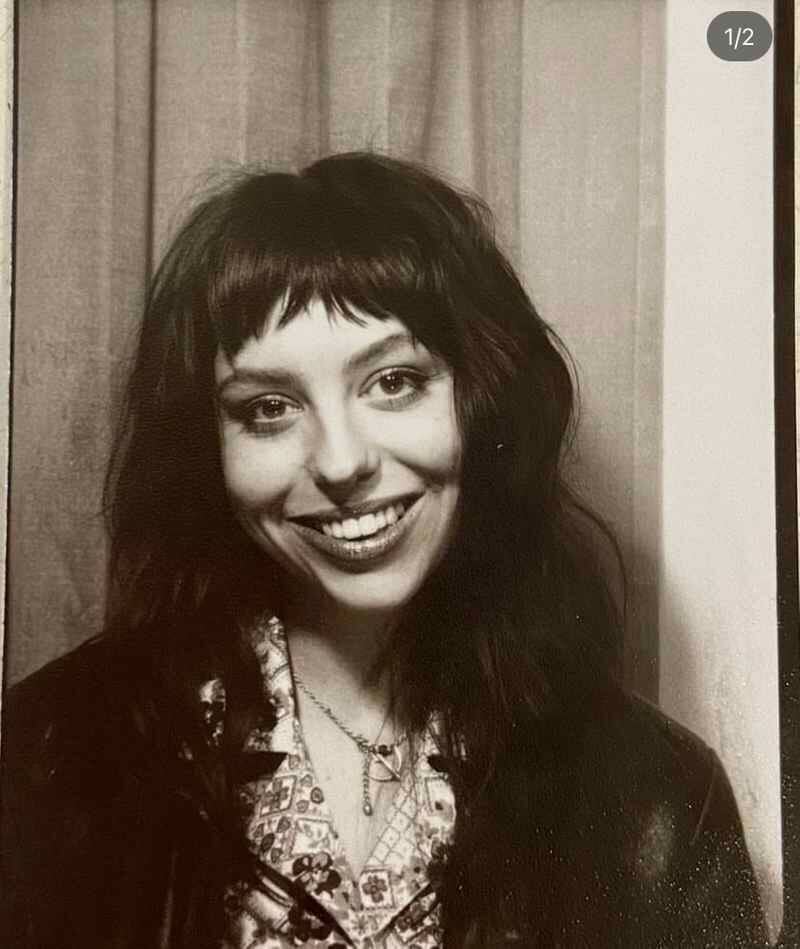
Words by Angelika May
Photography by Anya Rose
You may remember the hazy days of your youth consisted of scrolling through Tumblr, soundtracked by a certain woozy indie band — the kings of Indie Sleaze, Swim Deep.
Lucky enough for you, Swim Deep are releasing their 5th studio album, Hum, on the 19th of June via Submarine Cat. The album is an introspective kaleidoscope of contrasting emotions regarding family ties, new life, and the loss of life. In the same month that Austin Williams’ first child, Mary, was born, William’s partner Nell experienced the tragic loss of her father, which created a seismic life event that heavily impacted the album. Sonically, the record is a defiant cut of alternative rock, clouded by distortion, and it certainly lands with a bite against the chiming melodies. It is the band’s heaviest, most adventurous, and most uplifting album in years, reflecting a group still chasing their dreams with conviction, but now with something much deeper at stake.

Through struggling with financial constraints and continuing to work alongside producing music, this album exemplifies the determination of the band and what sits at the crux of longevity: the hunger, the drive, and the passion to continue making music for oneself regardless of the outcome.
Reflecting on the photographs used to promote the latest album Hum, James Balmont noted that the images really sum up the sentiment of the album — that “we’ve been through this struggle, and now we’ve all come together to plant this very victorious feeling”, turning personal upheaval into a collective uplift.
Originally emerging as part of the Digbeth-based B-Town scene, the band gained a notable reputation through their early days touring with the likes of The 1975 and Two Door Cinema Club.
I spoke to Austin Williams (vocals), James Balmont (keys), Thomas Fiquet (drums) and J.J. Buchanan (guitar) about loving and losing, “The Indie Landfill” and the brotherhood of Swim Deep.
Austin, you’ve said hearing a demo from Hum felt like hearing one of your favourite songs for the first time. How do you see the journey from early Swim Deep to who you are now?
Austin: That was J.J.’s demo for “Photograph”, it has that swelling, dreamy quality. The melody is one of my favourites I’ve ever heard, and I’m so honoured that we have that song in our discography.
It’s been a very long journey. Recently I was thinking about how impossible it is to tap into the exact same creativity you have when you first start creating. When I first started writing songs, it was the first time I’d ever expressed myself in that way. It’s a bit like drawing when you’re three years old, you’ll never paint in quite the same way again, because there are no filters, and no one telling you whether you’re good or bad.
I think accessing that kind of creative instinct is something every human should do every day. I’m really thankful for the journey, and I got to experience a lot as a young man. Interestingly, things feel much more stable now, even though the band was probably more financially stable at the start than it is today.
What’s changed is that I feel much more at peace with songwriting and being in a band. Especially on this record, even compared to the last one. As difficult as the industry can be, I feel a greater sense of peace with myself as a songwriter.
J.J., were you secretly thinking, “Austin’s going to love this one”?
J.J.: That’s what a partnership is, in a way. You’re always trying to impress each other. It’s not a competition, but you want to inspire one another.
James: I remember when J.J. sent through his demo of “Photograph”. I was out doing chores, I think I was in Brick Lane trying to find a post office. I opened the email and put the song on. As often happens when you’re walking around, the exercise is pumping endorphins through your body, so I was already feeling pretty good.
I was enjoying the song so much that I stopped trying to find the post office and just wandered around listening to the demo. It’s moments like that that inspire you to make music.
A: That feeling is what I’ve realised I do it for. It’s incredibly fulfilling. It’s why I keep making music. Even if I’m at home on my own, I sleep a lot easier if I’ve written a song on the piano that day. Then, when you get that same feeling as a band, that eureka moment, you go home with a spring in your step because you’re created something together. That’s a really special feeling.

There’s that idea of “The Indie Landfill” where bands from your era faded out. What do you think helped Swim Deep avoid that, and keep evolving instead?
A: I’d love to be in the landfill.
I think, for us, there were definitely bands we looked at and thought “We want to do that.” The blueprint was probably Beach Fossils. We wanted to copy them and see what happened. But, at the same time, we already had our own sound. So if we had ended up in the landfill, what kind of landfill would it even have been?
J: For us, when we made our second album, there was a very clear reaction to the first. Take Mothers as an example. We wanted to explore different things. We were listening to a lot of acid house, partying a lot, going out a lot, getting into different kinds of music. Then we discovered synths and drum machines, and that naturally found its way into the record.
A: That was our rebellion.
J: It captured that moment in our lives when we discovered pills.
So is it about staying true to your sound and yourselves, but then adding new elements as you discover things along the way?
J: As you get older, you realise what the band was about in the first place. You learn to be true to yourself. In a way, our fourth album, Big Star, was about returning to those roots again.
I think the way to stay out of the indie landfill is not to think too much about what everyone else is doing. You have to write your own story. We’re more interested in making the music we want to make than making what other people want to hear. There’s something quite earnest about that. We don’t really follow trends, we just follow whatever we’re interested in at the time.
A: Are we saying a band becomes “landfill” when they stop? Because if that’s the definition, then the answer is just never quit. But being in a band is really hard. We can barely get together because everyone has full-time jobs. By that logic, are The Magic Gang landfill just because they couldn’t afford to be a band anymore?
I think a lot of people romanticise indie bands from their youth, and when those bands disappear, they often overlook the reality that financial difficulties are usually the reason.
J: That’s the really sad thing. So many of our peers, the bands we came through with, the people who pushed you to make something as good as your mates, have disappeared. It’s hard because being in a band in your thirties is very different. People have jobs, responsibilities, and children. You’re not out every night seeing your friends’ gigs anymore.
Eventually it comes back to the music. And it’s quite refreshing to remind yourself why you’re here in the first place.
We’re still writing new chapters of this story. A landfill implies a kind of finality, you bury something, cover it up, and move on. It's a shame that happens to a lot of bands.
But we still have things to say. We still have things to explore. That’s what keeps you away from the pit.
A: Let’s call it indie heaven instead.
Sonically, Hum feels heavier and more expansive than your earlier work, what do you think you were chasing musically?
J: There’s definitely a grunge element to it that I really connected with. We were talking about this earlier, I’m not sure how much of it explicitly comes through on the album, but we were listening to “Nutshell” by Alice in Chain a lot.
We’d arrived at that kind of music from a completely different direction. We’d always appreciated things like MTV Unplugged records and that grunge-er guitar sound, but it felt like we’d finally reached it through our own journey. I’m glad some of that influence found its way onto the album. On tracks like “The Throw” and “The Broken” there’s definitely a grungier edge, and that was an exciting influence to explore.
A: There was probably a bit more angst in the band, and that’s one reason the record feels heavier. Josh joining the band was a huge part of that too. He’s a proper guitarist in the truest sense of the word, someone who is really dedicated to the craft and to making noise. Having him involved elevated everything.
I’d also read the Mark Lanegan book around that time and was listening to a lot of Screaming Trees and Alice in Chains. It was cool because it was the first time in my life that guitar music and rock music really spoke to me. Before that, I probably would have thought it was a bit cringe.
One of the beautiful things about getting older is allowing yourself to fall in love with things you never thought you’d be into. You can only express where you are at that moment. I could never make the album I made a year ago — or even two years ago again.
J: For us, making another woozy, dreamy indie record wouldn’t really have been breaking new ground. The same way that after making one type of record, we ended up making something much more influenced by rave music. We’re always reacting to where we’ve just been.
A: There’s also a lot to be said for the spaces where music gets made and how those environments shape the sound.
You can look at somewhere like CBGB and the scene that grew around it. Or look at early East Coast hip-hop, where people were making loud music for tight block parties, and then compare that with the West Coast, where there’s more space, more horizon, more sunlight. You get those huge Dr. Dre reverbs and expansive synths.
When I was writing this album, I had a baby at home and barely any time to write. It started to feel very claustrophobic. The only time I really had was when I could get into a room with these guys. By that point I just wanted to play loud. I wanted that release.
J: Something else that had an effect was where we recorded it. We’ve made four or five records in the same studio in Brussels, but this was the first time we’d ever been there in the summer rather than the depths of winter.
Making an album is quite an intense process, so it was nice to finish for the day and still have daylight. We could sit outside, have a beer, and watch some football. We were finally seeing the place in a completely different light.
I think some of that brightness and positivity found its way into the record. Albums capture a chapter of your life, and when I listen back to Hum I hear a lot of optimism, possibility and openness in it. Compared to the previous record, which felt much more melancholy, this one feels lighter and more hopeful in a lot of ways.

This album’s been described as “live, loss, love”, how did becoming a parent while experiencing grief shape the way you write and think about music?
A: Lyrically, it became part of my story, and something I felt I needed to tell.
Going through that experience myself was one thing, but watching someone you love go through such profound grief whilst also carrying a baby, giving birth, and then having to experience that grief all over again through those milestones, it’s such a whirlwind of emotions. I can only imagine what it felt like for my partner.
There’s a strange frustration in it. You feel like you’re being denied the chance to experience this huge moment in your life without grief attached to it. You find yourself thinking, why does it have to be one in and one out? Why can’t we just enjoy the arrival of this baby without that shadow hanging over everything?
It definitely affected me creatively. The lyrics became darker, and probably less dreamy than before. They felt more grounded in reality. I’m not entirely sure yet how it affected the music itself, I might be able to answer that properly in a few years’ time. It’s hard to hear those things when you’re still so close to the record.
Does going through something like that change the way you think about making an impact or leaving a mark on the word?
A: Yeah, I think it does, actually.
My father-in-law, who passed away, left a huge mark on the world. He was a big part of the live music scene and touched a lot of people’s lives. But he wasn’t somebody who cared about legacy in the traditional sense. He wanted to leave with nothing.
That changed the way I think about it. It’s not really about living forever through your music. It’s more about creating whilst you’re here. Expressing yourself. Trying to make people feel something. Maybe that’s enough.
At the same time, I do think there’s value in showing the people around you that there are different ways to live. If my children, or maybe one day my grandchildren can look at what I’ve done and feel inspired by someone pursuing something that isn’t financially stable, but is still deeply meaningful, then that’s important too.
Music has given me something beyond money or success. It’s become part of my family’s story now, and I think they can feel that as well.
J.J., you’ve talked about carrying a photo of your partner and writing about holding onto moments, what is that relationship between music, memory, and nostalgia for you?
J.J.: Music has always been tied to memory for me. There are albums and songs that instantly take you back to your childhood, to sitting in the back seat of the car, listening to CDs, and thinking that whatever problem you had at the time was the biggest thing in the world.
What songs evoke that feeling for you?
J.J.: A lot of Eminem.
J: I used to do this thing where, if there was an album I was really looking forward to, I’d deliberately hold off listening to it until I was on holiday somewhere.
Music is so good at attaching itself to places. If you wait and hear an album for the first time somewhere special, it plants itself in that memory forever. It genuinely works. There are songs I hear now that immediately remind me of walking around Central Park or being in a particular city at a particular time.
It’s almost like a little neuroscience trick, using music to implant memories. So if anyone likes this album, I’d recommend listening to it somewhere memorable.
When you first had the idea for this song about your partner, what feelings were you trying to explore?
J.J.: I’ve always had a strange relationship with the passing of time.
When I was a kid, I didn’t really understand what death was. I remember being on the tube with my dad and seeing a graveyard out of the window. I asked him what it was and he just said, very bluntly, “That’s where you go when you die.”
I remember being completely shocked by that. It was probably the first time I really understood the idea of mortality. From that point on, I developed this fear of time passing and a desire to hold onto moments.
What’s the photo that you carry?
J.J.: It’s a Polaroid of my partner that someone else took. She’s on a train on the way to see Beyoncé at the O2.
You’ve always wanted Swim Deep to feel like a brotherhood, with members coming and going, how have you managed to keep that feeling intact?
Thomas: I was one of those members that came in, I joined in 2018, and I always say that I’ve been in a lot of bands, but Swim Deep is the closest I’ve ever felt to what a real band environment should feel like. Compared to everything else I’d experienced before, it just works. People coming in and out doesn’t really change the core of it.
J: Being in a band for a long time gives you massive shared life experiences. You go through things together that you never forget, playing huge festivals, Glastonbury for the first time, travelling to places like Thailand and China. Those are huge life moments.
But then there are also really intense personal moments mixed in with that. We’ve had times where someone has had life-changing news just before going on stage, like hearing about someone passing away right before a show. Or Austin finding out he was going to become a father just before we went on stage in Norwich. When you go through things like that together, it creates a real brotherhood.
T: I remember getting my settled status result right before a gig in Cambridge. I was so happy I was able to stay, I was crying tears of joy. Then in Thailand after a show, as all ended up crying again, but this time out of happiness. We even played some of our songs in a reggae style using sand in bottles as shakers. After we finished, we just ran straight into the sea and went skinny dipping. It was one of those moments where you think, this is exactly why we do this.
J: I remember my first time playing with Swim Deep and realising we had to share hotel rooms, and sometimes even beds, just because there wasn’t enough money for more rooms. On some recording trips at ICP, everyone was literally in the same bed at one point.
A: That wasn’t always forced, we chose it sometimes. I remember one time we were flying from Hong Kong to Thailand. Three of the guys were ahead of me and Cav boarding, and we could hear them cheering. They’d been bumped up to business class.
Me and Cav were so jealous, we had the worst seats at the back. They were just lying down, sipping drinks, living it up. I was fuming, but also happy for them.
Then we got to the hotel and the reception told us we each had our own rooms and two honeymoon suites. Me and Cav looked at each other like, thank you very much. The rooms were massive, with hot tubs and huge beds. I went straight to their doors and asked if they wanted to share instead, because we didn’t want to be on our own. We were twenty-one, just out in the world.
You go through the hard times too, every day it’s: are people hearing our music, what are we doing, should we carry on? That’s the brotherhood.
J: Me and Austin always end up in the same place of thinking, why are we doing this to ourselves? And then you go on tour and remember exactly why.
A: A lot of it comes from hunger too. Working jobs such as the pub gives you the feeling that you want it more than anything. It makes you determined to make a living from music.
T: It reminds me of an interview with Brian Jonestown Massacre. He said something like, once you’re in a band you’re part of a tribe.
A: It’s something you can only understand if you’re in it.
Keep up to date with Swim Deep
Pre-order Swim Deeps upcoming album 'Hum' here
'Hum' in-store tickets here
Catch Swim Deep live this September and October:
24/9 - Brudenell Social Club, Leeds
25/9 - Yes, Manchester(low tickets)
26/9 - Mcchuills, Glasgow
30/9 - Bodega, Nottingham
1/10 - Clwb Ifor Bach, Cardiff
2/10 - Moth Club, London
3/10 - Moth Club, London


Comments